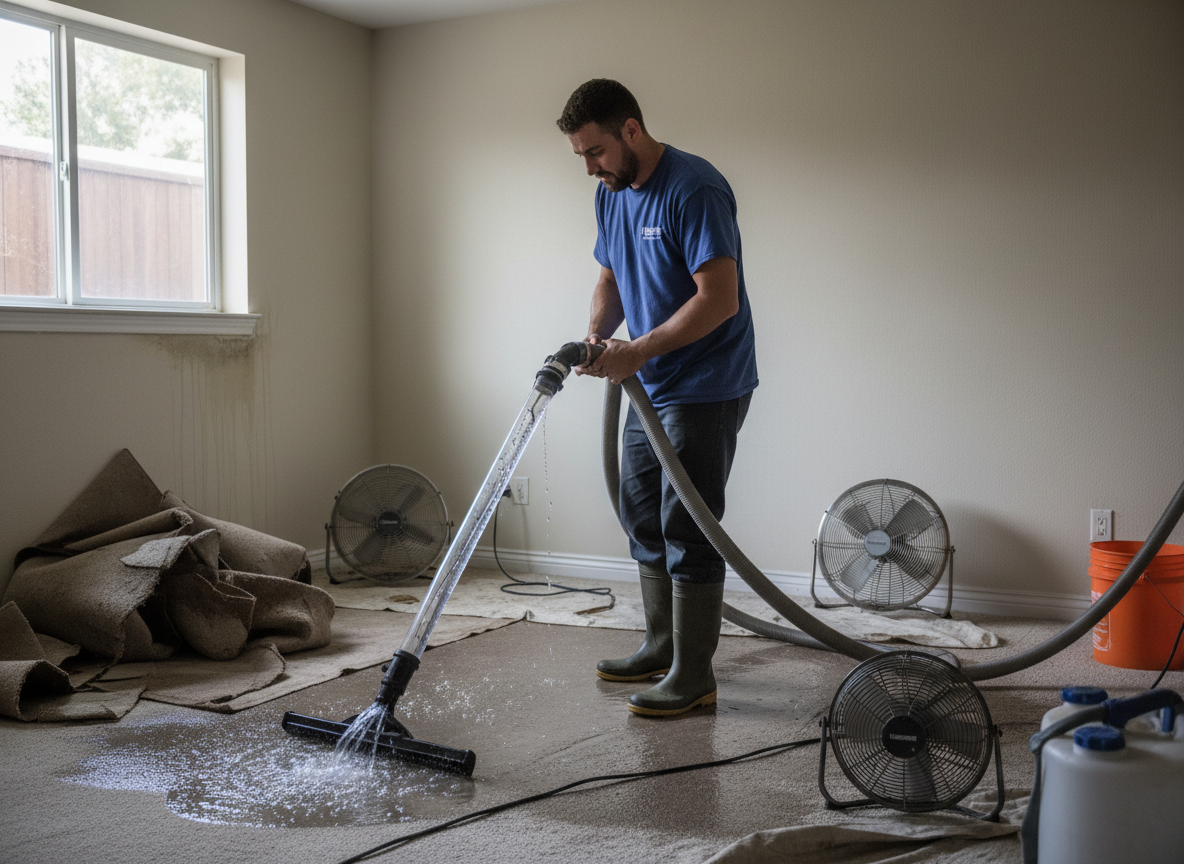
Water extraction in Solana Beach requires accounting for the mild coastal Mediterranean climate where ocean influence keeps humidity elevated year-round. Homes in Lomas Santa Fe and Solana Highlands often feature older slab foundations and crawl spaces that trap moisture after pipe bursts or heavy rain. Technicians deploy high-volume pumps and moisture meters immediately to pull standing water before it migrates into drywall or subfloors, preventing secondary damage common in San Diego County coastal properties.
Properties near Fletcher Cove Park and the Solana Beach Coastal Rail Trail sit on terrain that directs runoff toward lower-lying structures during winter storms. Extraction crews focus on removing water from carpet pads and insulation quickly because residual moisture combined with salt air accelerates corrosion in HVAC systems and electrical boxes. In neighborhoods bordering San Elijo Lagoon, brackish water intrusion demands specialized antimicrobial rinses after extraction to address organic sediment that standard pumps leave behind.
Nearby cities like Encinitas, Del Mar, and Carlsbad share similar housing stock from the 1960s onward, where galvanized plumbing failures create sudden interior floods. Extraction protocols here include negative air machines to control airborne particulates while water is removed, followed by targeted drying of wall cavities using injectors. This approach accounts for the ocean-driven humidity that extends drying times compared to inland San Diego jobs.
Technician insight
In Solana Beach, the thing that catches most people out with water extraction is how the constant ocean humidity slows drying in older Lomas Santa Fe homes with slab foundations. Homeowners often stop after the visible water is gone, but salt air keeps hidden moisture active in crawl spaces near the lagoon, leading to mold weeks later if we don't run equipment long enough.
Pipe Burst in Solana Highlands Home
A kitchen supply line failed overnight in a 1970s home near the Coastal Rail Trail. Standing water reached the adjacent family room and began wicking into the slab edge. We extracted the bulk water, placed drying equipment under the cabinets, and returned daily to monitor readings until the concrete tested dry, avoiding the need for slab removal.
How it works
- 1
Initial Assessment
Technicians arrive within the hour, locate the water source, and map affected zones using moisture detection tools across the property.
- 2
Water Removal
High-capacity pumps and extractors pull standing water from floors, carpets, and low-lying areas before it spreads further.
- 3
Drying Setup
Air movers, dehumidifiers, and wall injectors are positioned to address hidden moisture in coastal construction materials.
- 4
Final Verification
Moisture readings are rechecked and documented to confirm the structure meets dry standards before equipment removal.
Pricing
Pricing depends on water volume, affected square footage, and drying duration; we provide upfront quotes after inspection.