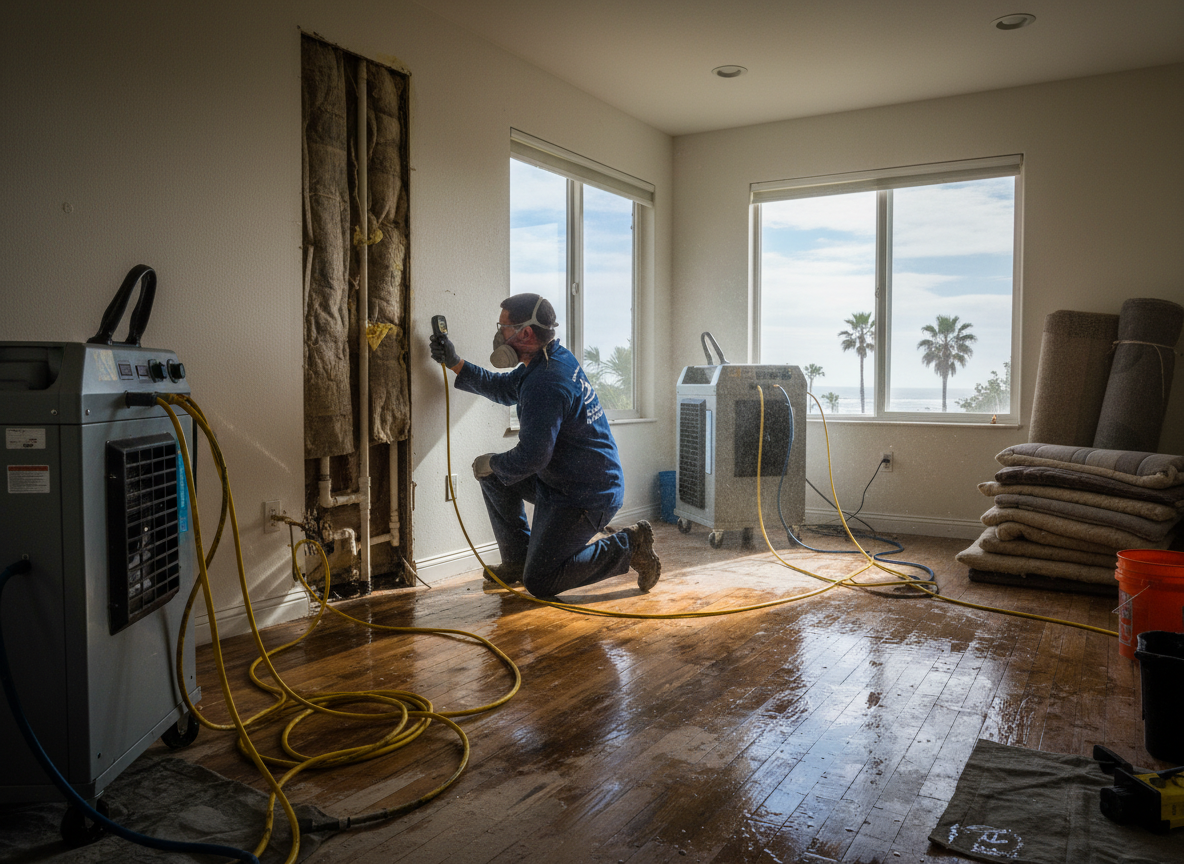
Water leaks in Solana Beach often trace to aging galvanized lines in homes built before the 1980s around Lomas Santa Fe Drive and in Solana Highlands. The mild coastal Mediterranean climate keeps humidity elevated year-round, so even small pinhole leaks under slabs or behind shower walls can saturate drywall and subfloors without obvious surface signs. Crews start by isolating the source with moisture meters and thermal imaging, then remove standing water before mold sets in within 48 hours. Properties near Fletcher Cove Park face extra risk from wind-driven rain pushing under tile roofs, requiring targeted flashing repairs rather than full replacement.
Restoration work in Downtown Solana Beach frequently involves lifting engineered hardwood that has cupped from underfloor leaks tied to the San Elijo Lagoon's tidal influence. Salt-laden air accelerates corrosion on copper fittings and appliance hoses, so technicians replace sections with PEX or brass to prevent recurrence. After extraction, industrial dehumidifiers and air movers run for three to five days while monitoring moisture levels in concrete slabs common to hillside lots. Final steps include reinstalling baseboards and applying antimicrobial treatments only where visible growth appears, avoiding unnecessary chemical use in occupied homes.
San Diego County building codes require permits for any structural drying that affects load-bearing walls, so restoration plans in Encinitas-adjacent neighborhoods document every step for inspectors. Leaks from second-story bathrooms in Solana Highlands often travel along stucco walls and exit near the foundation, demanding removal of exterior plaster sections rather than interior-only fixes. Technicians coordinate with local plumbers for repiping when multiple leaks appear in the same plumbing tree, common in 1970s tract homes along the Coastal Rail Trail corridor.
Technician insight
In Solana Beach the thing that catches most people out with water leak restoration is how the constant ocean influence keeps relative humidity above 65 percent even in winter, so a leak under a Lomas Santa Fe home's slab can stay damp for weeks after extraction if you skip the daily meter checks.
Hidden Slab Leak in Solana Highlands
A homeowner noticed musty odors near the laundry room. Inspection found a pinhole leak in a 1978 copper line under the slab that had wicked moisture into the subfloor toward the San Elijo Lagoon side of the property. We isolated the line, extracted water, ran drying equipment for four days, and replaced the affected section with PEX before reinstalling the flooring.
How it works
- 1
Source Location
Technicians use moisture meters and infrared cameras to trace leaks in walls, slabs, and roofs without unnecessary demolition.
- 2
Water Extraction
Standing water is removed with portable pumps and wands, followed by removal of saturated carpet pads and drywall sections.
- 3
Drying and Monitoring
Equipment placement accounts for ocean humidity; daily readings continue until materials return to pre-loss moisture content.
- 4
Restoration and Repairs
Affected materials are replaced or refinished, with attention to matching original stucco and tile finishes found in local homes.
Pricing
Upfront quotes follow inspection; costs vary with leak location, affected square footage, and whether slab or roof work is required.