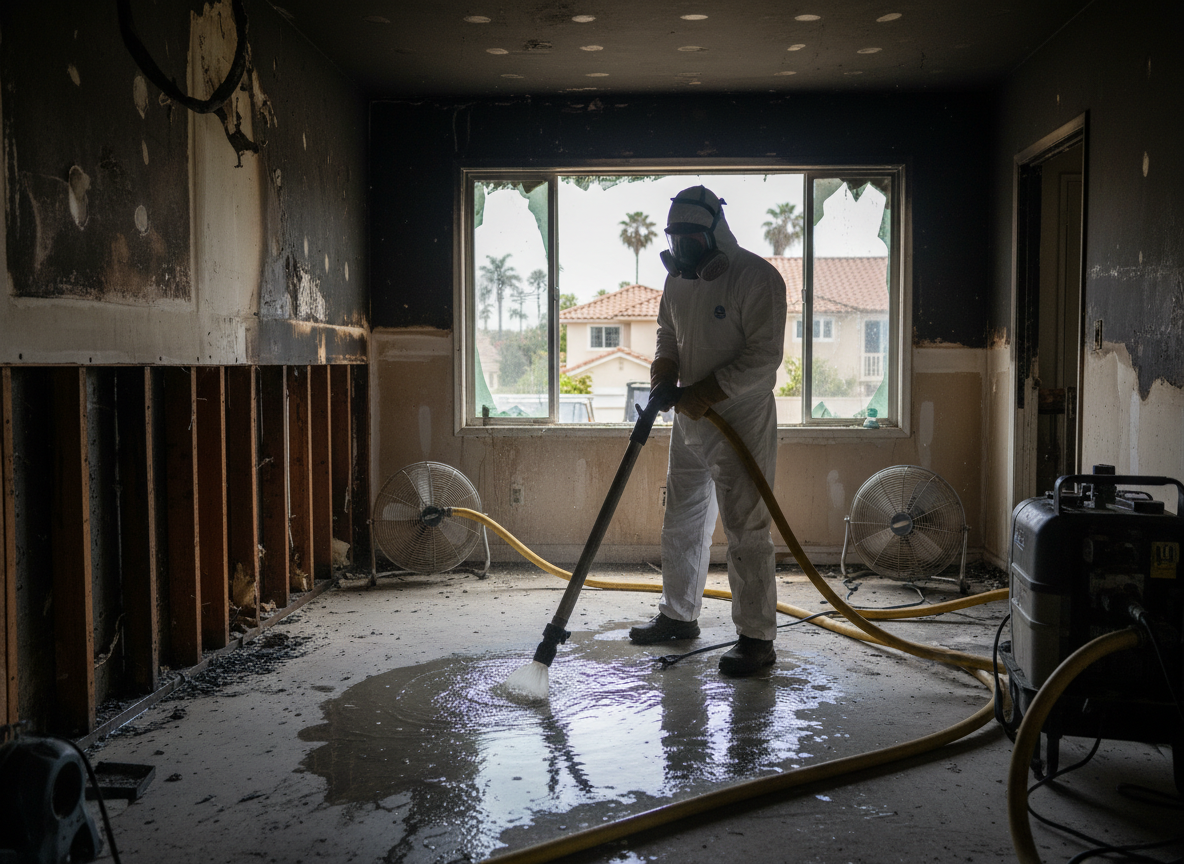
Firefighting efforts in Solana Beach often introduce large volumes of water into wood-framed homes built from the 1960s onward in neighborhoods like Lomas Santa Fe and Solana Highlands. This water quickly mixes with soot and ash, driving contaminants deep into drywall, insulation and hardwood floors common in these properties. The mild coastal Mediterranean climate keeps humidity moderate most of the year, yet ocean influence near Fletcher Cove Park and the Coastal Rail Trail can slow evaporation in enclosed spaces, raising the risk of secondary mold growth within days.
Remediation crews must separate water extraction from smoke odor neutralization because standard drying equipment alone leaves behind acidic residues that corrode copper wiring and HVAC components found in many San Diego County coastal residences. In Del Mar and Carlsbad border homes, older plaster ceilings frequently trap moisture that migrates into attics, requiring targeted demolition rather than surface drying. Technicians document every affected layer before removal to satisfy insurance adjusters who review claims for properties near San Elijo Lagoon where soil drainage varies.
Portable air scrubbers and hydroxyl generators run continuously because ocean breezes can reintroduce particulates through open windows during the multi-day drying cycle. Crews also address hidden water behind tile in bathrooms and kitchens, areas where fire hoses commonly direct streams. Proper sequencing prevents warping of original trim and cabinetry that owners in Downtown Solana Beach often want preserved rather than replaced.
Technician insight
In Solana Beach the thing that catches most people out with water damage remediation after fire is how quickly ocean-influenced humidity lets moisture hide behind plaster in 1970s Lomas Santa Fe homes; if you stop drying too soon the soot smell returns the first foggy morning.
Firefighting Water in Solana Highlands Home
A kitchen fire brought firefighters who flooded the first floor and attic of a 1978 single-story house. We found water had traveled along ceiling joists into two bedrooms. Extraction and selective demolition removed saturated drywall and insulation, then drying equipment ran for four days until readings stabilized. The homeowner returned without lingering smoke odor or new mold growth.
How it works
- 1
Initial Assessment
Technicians arrive within hours, map water migration paths through ceilings, walls and subfloors, and test moisture levels in materials typical of Solana Beach construction.
- 2
Water Extraction
High-volume pumps and wands remove standing water from firefighting efforts before it migrates toward foundations near the San Elijo Lagoon.
- 3
Contaminant Removal
Soot-laden drywall, insulation and flooring are cut out and bagged to eliminate acidic residues that can damage remaining structure.
- 4
Drying and Odor Control
Air movers, dehumidifiers and specialized filtration run until moisture readings return to pre-loss levels, with ongoing monitoring for coastal humidity effects.
- 5
Final Clearance
Independent verification confirms surfaces are dry and odors neutralized before reconstruction begins.
Pricing
Costs depend on the volume of affected materials, number of rooms involved, and whether hidden moisture requires additional demolition in older coastal homes.