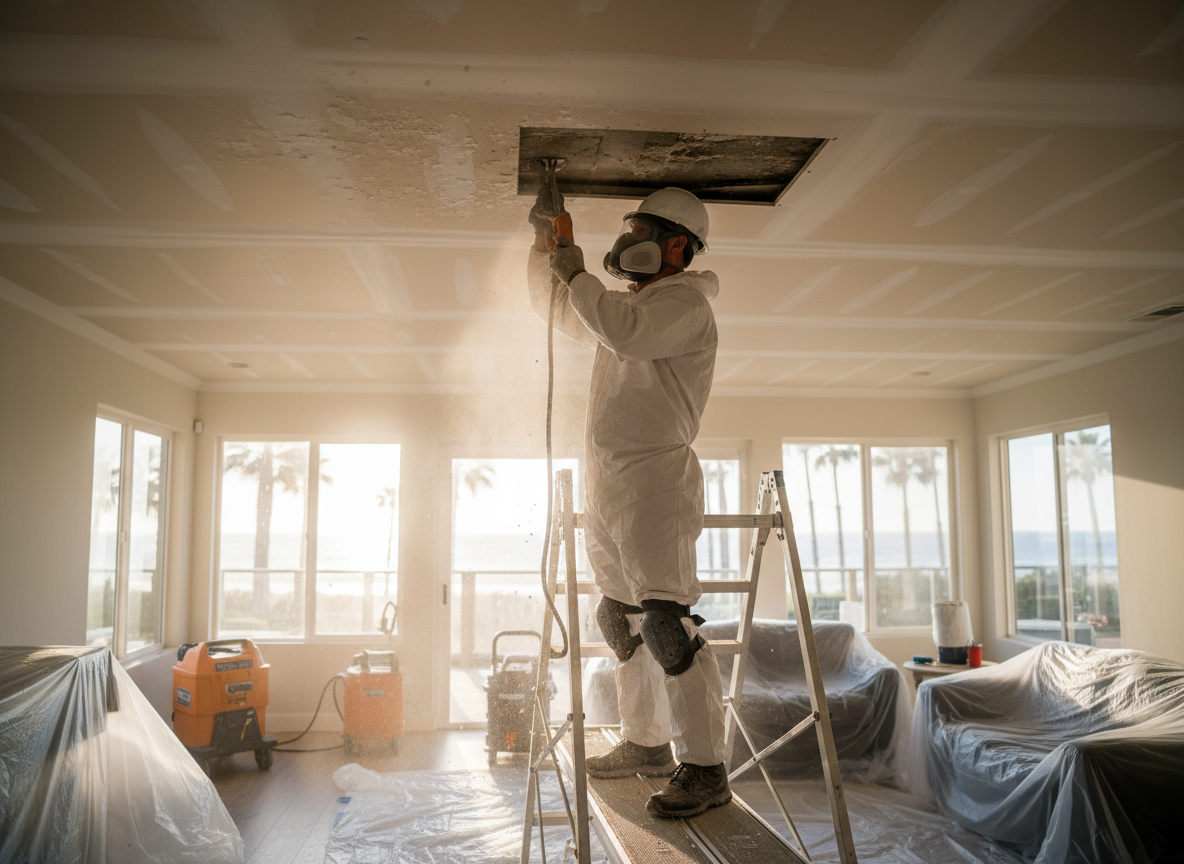
Ceiling water damage in Solana Beach often starts from roof leaks where coastal fog and occasional heavy winter rains penetrate older tile roofs common in Lomas Santa Fe and Solana Highlands. Salt air accelerates corrosion on flashing and underlayment, allowing moisture to travel along ceiling joists before visible stains appear. Technicians must trace the path through stucco or drywall ceilings without disturbing the original plaster in pre-1980 homes that dominate these neighborhoods.
Once the source is isolated, removal of saturated drywall or insulation requires containment to prevent mold spores from migrating into HVAC systems that pull air from the mild Mediterranean climate outside. In Downtown Solana Beach properties near Fletcher Cove Park, limited attic access means crews often work from below while protecting hardwood floors and built-in cabinetry typical of coastal cottages. Drying equipment must account for ocean humidity that slows evaporation rates compared to inland San Diego County jobs.
Code considerations include ensuring any repaired ceiling meets current San Diego County fire-rated assembly requirements when the home sits close to the Solana Beach Coastal Rail Trail right-of-way. Homeowners frequently discover hidden damage only after a neighbor reports water staining on shared walls in attached units common in Solana Highlands.
Seasonal Guidance
Winter storms increase call volume from Lomas Santa Fe homes where wind-driven rain tests roof edges. Summer humidity can prolong drying times even after the leak is fixed, requiring daily moisture readings before new drywall installation.
Technician insight
In Solana Beach the thing that catches most people out with Ceiling water damage repair is how quickly salt-laden air corrodes roof flashing on homes in Solana Highlands. A small drip that looks minor on a mild day turns into widespread ceiling saturation after one winter storm because the ocean influence keeps humidity high and drying slow.
Hidden Leak Behind Kitchen Ceiling
Water stains appeared above a Solana Highlands kitchen after a December storm. Inspection found deteriorated flashing on the original tile roof allowing water to travel along ceiling joists into the living area. Crews removed the wet section, dried the joists, and replaced the ceiling while the homeowner stayed in the adjacent Del Mar rental for two nights.
How it works
- 1
Source Identification
Inspect roof, plumbing, and HVAC lines from the attic or exterior using moisture meters to locate the entry point without unnecessary demolition.
- 2
Containment and Removal
Isolate the affected ceiling section and remove saturated materials while protecting adjacent rooms and flooring.
- 3
Drying and Monitoring
Place air movers and dehumidifiers, then track moisture levels daily until readings return to normal for the coastal climate.
- 4
Repair and Finish
Replace drywall or plaster, match texture, and apply primer and paint compatible with existing finishes.
Pricing
Cost depends on ceiling access, square footage affected, and whether mold remediation is required alongside the repair.