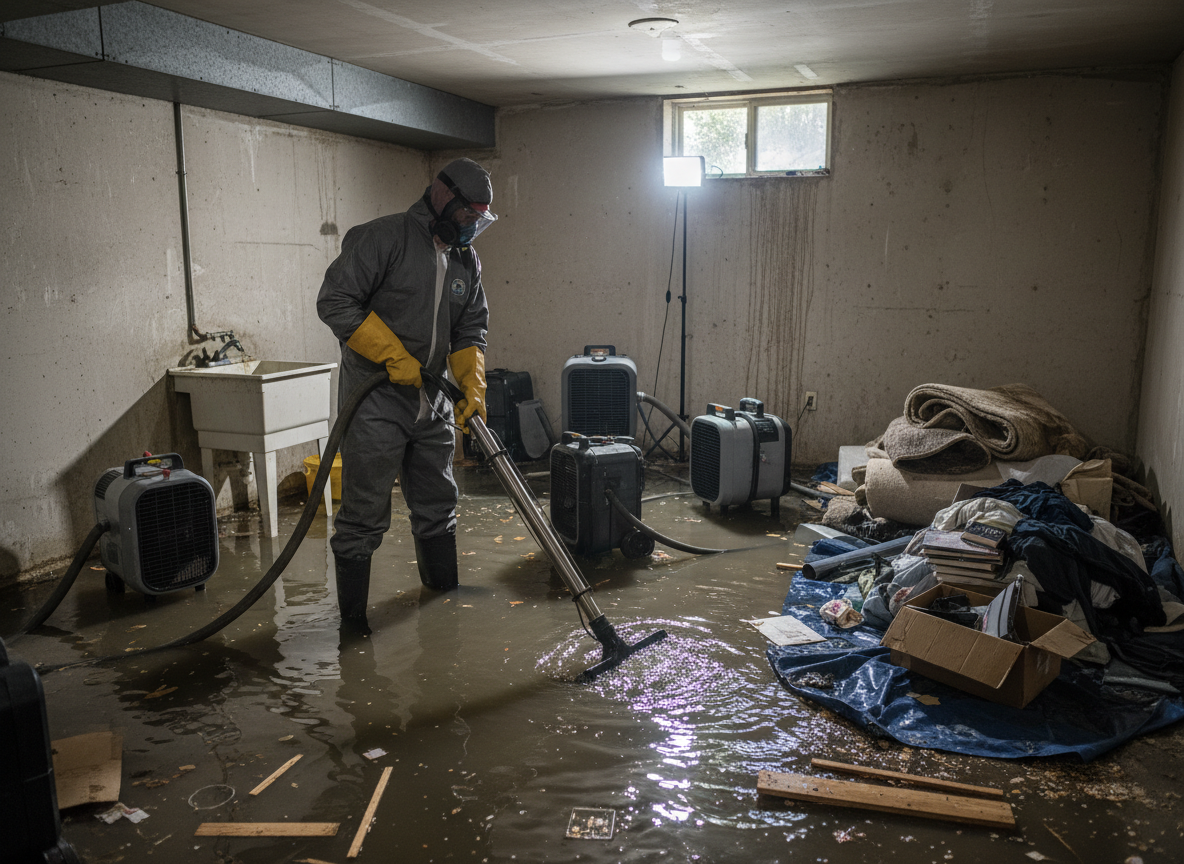
Solana Beach basements sit close to the water table influenced by the San Elijo Lagoon and ocean tides. When heavy winter rains hit Lomas Santa Fe or Solana Highlands, water often pushes through older concrete walls and slab joints rather than just surface leaks. Crews start by isolating the source, then extract standing water before it migrates into adjacent living spaces or under flooring in nearby Encinitas and Del Mar homes. The mild Mediterranean climate means moisture lingers longer than inland San Diego areas, so drying times stretch without proper airflow equipment.
Many homes built before the 1980s in Downtown Solana Beach have partial basements with limited access and outdated sump systems. Flood events here frequently involve both clean rainwater and contaminated groundwater that has picked up salts from the coastal soil. Technicians remove affected drywall up to the moisture line, treat framing with antimicrobial solutions, and document hidden pockets behind cabinets or under stairs that homeowners miss. Work along the Coastal Rail Trail corridor adds extra coordination because equipment trucks cannot block pedestrian paths during extraction.
After initial removal, dehumidifiers run continuously while crews monitor moisture readings in the slab and joists. Solana Beach code requires proper ventilation when finishing below-grade spaces, so any rebuild must account for vapor barriers that prevent recurring mold. Nearby Carlsbad projects show that skipping this step leads to callbacks within two seasons when the next storm arrives.
The address at 911 Lomas Santa Fe Dr keeps response times short for local calls, allowing same-day arrival even on weekends when coastal storms hit hardest.
Technician insight
In Solana Beach, the thing that catches most people out with Basement flood cleanup is how quickly coastal humidity re-wets framing after extraction if you do not run negative air and keep checking the slab edge near the San Elijo Lagoon side of Lomas Santa Fe. Older homes here have no French drains, so water just sits under the concrete until the next rain.
Lomas Santa Fe Basement After Winter Rain
Water entered through a cracked slab joint during a coastal storm. Inspection found saturation extending under the laundry room floor into the adjacent hallway. Extraction and targeted drying prevented mold growth in the 1960s-era walls while keeping the rail trail access clear for equipment.
How it works
- 1
Site Assessment and Water Source Location
Technicians inspect the basement, identify entry points from rain, lagoon seepage, or plumbing, and map affected zones in neighborhoods like Lomas Santa Fe.
- 2
Water Extraction and Containment
Standing water is pumped out using truck-mounted equipment while barriers prevent spread to upper levels or neighboring properties.
- 3
Drying and Moisture Monitoring
Air movers and dehumidifiers run until readings confirm the slab and framing in Solana Beach homes are dry, typically longer due to ocean humidity.
- 4
Sanitization and Documentation
Surfaces receive antimicrobial treatment; photos and moisture logs support insurance claims for properties near Fletcher Cove Park or the rail trail.
Pricing
Cost depends on water volume, depth of saturation, and whether hidden cavities behind finished walls require opening in older Solana Beach construction.