2026-10-15 ·
How To Check For Hidden Leaks In Coastal Homes
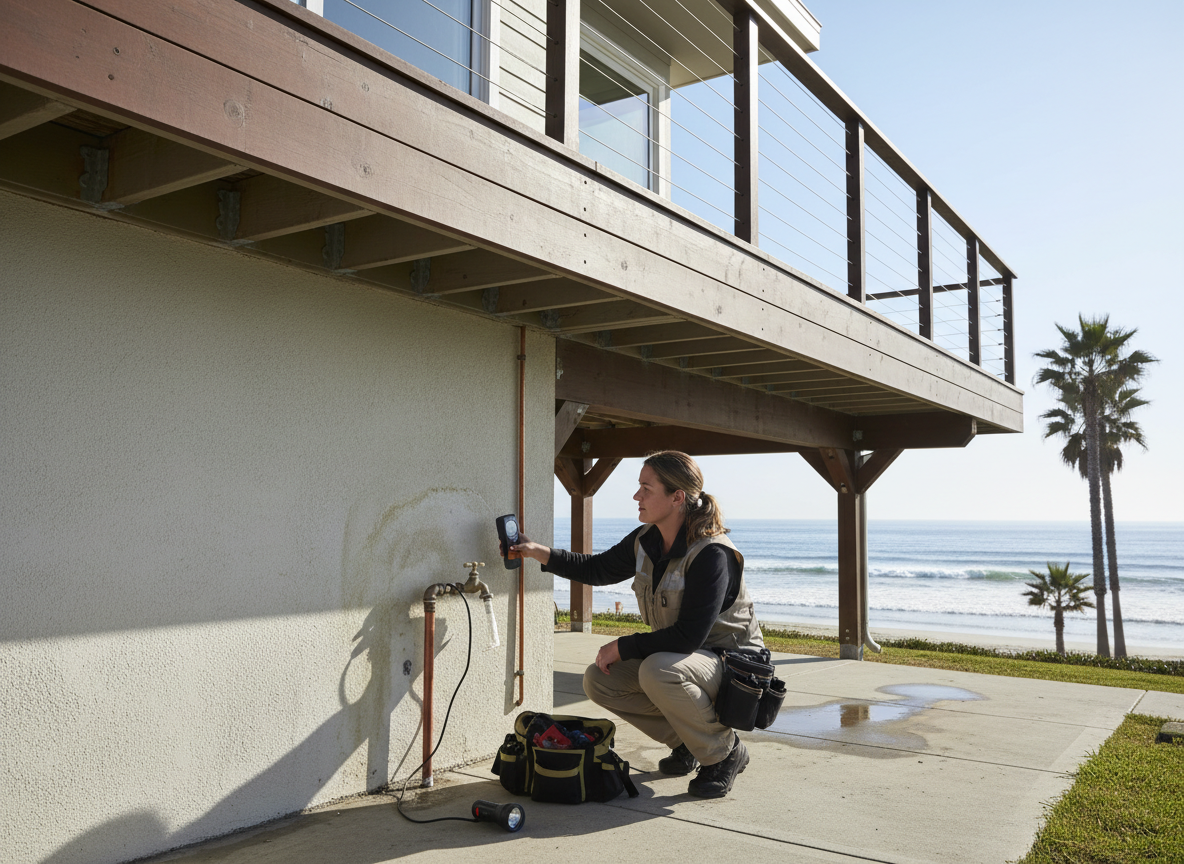
Checking for hidden leaks in coastal homes starts with a systematic walkthrough using a moisture meter on walls and ceilings, focusing on spots within 2 feet of plumbing lines, which typically reveals elevated readings above 15% in affected areas within the first hour of inspection.
Visual Inspection of Common Leak Spots
In Solana Beach homes built on the coastal bluffs of Lomas Santa Fe and Downtown Solana Beach, constant salt air and mild Mediterranean humidity accelerate corrosion on pipes behind tile and under sinks. Start at the ceiling where bathroom or kitchen fixtures sit above, looking for faint discoloration or bubbling paint that signals slow seepage from upstairs lines. Move to baseboards along exterior walls facing the ocean, as wind-driven moisture often pushes water through stucco cracks near Fletcher Cove Park properties. Check under kitchen cabinets for warped particleboard or musty odors that develop when leaks from dishwasher supply lines pool against the slab. In Solana Highlands neighborhoods, older ranch-style homes from the 1970s frequently show leaks at the transition between the main house and added sunrooms because differential settling cracks the copper joints. Run a dry paper towel along the inside of vanities and behind toilets to catch any damp residue that points to wax ring failure or supply valve drips.
Using Moisture Meters and Thermal Checks
A pin-type moisture meter gives the most reliable readings on drywall and wood framing in homes near San Elijo Lagoon where groundwater sits closer to the surface. Take baseline measurements on interior partition walls first, then compare readings within 6 inches of any visible pipe penetration or appliance connection. Readings climbing from 8% to 22% or higher indicate active moisture that has not yet reached the surface. For larger areas, an infrared camera quickly flags temperature differentials of 3-5 degrees Fahrenheit along ceiling joists where cold water lines sweat or hot lines leak into insulation. In the ocean-influenced climate of Solana Beach, perform these checks during early morning when indoor humidity drops below outdoor levels, making wet spots stand out more clearly against drier materials. Document every elevated reading with photos and meter numbers so a follow-up water leak restoration professional can target repairs without unnecessary demolition.
Addressing Coastal Humidity and Seasonal Factors
The steady ocean influence keeps relative humidity between 65% and 80% year-round in Solana Beach, which masks slow leaks until they create visible mold or soft subfloors. After winter storms that drop 2-4 inches of rain, inspect attics and crawl spaces for water tracking along rafters from roof-to-wall intersections common in Lomas Santa Fe homes. Summer fog adds surface moisture that can mimic leak patterns on stucco, so differentiate by checking whether the damp area grows after a multi-day dry spell. Homes near the Solana Beach Coastal Rail Trail often sit on fill soil that shifts slightly with tidal changes, stressing sewer laterals and creating hidden slab leaks that travel 10-15 feet before surfacing. Compare readings taken before and after running showers or laundry to isolate whether the moisture source is internal plumbing or external humidity.
Next Steps After Detection
Once a moisture meter confirms elevated levels, stop using the affected fixtures and document the exact locations for any required permits. Homeowners in Encinitas and Del Mar follow the same coastal patterns and often link to local permit rules for water damage repairs before opening walls. Persistent readings above 20% usually require professional water damage mitigation to prevent mold growth within 48 hours. Review the average cost factors for water extraction in Solana Beach to understand variables like access under tile versus slab work. For ongoing prevention, schedule annual checks of supply lines and consider replacing rubber hoses every 8-12 years before they fail behind appliances.